How to Arrange Flowers for a Table, Step by Step
A practical florist’s guide to low table centrepieces and everyday vase work: clean stems, firm mechanics, focal flowers first, greenery last, and no floral foam.
As an Amazon Associate, Flowers on Demand earns from qualifying purchases. Links to Amazon.ca in this article are affiliate links: if you buy through one we may earn a small commission, at no extra cost to you.
How to arrange flowers for a table centrepiece
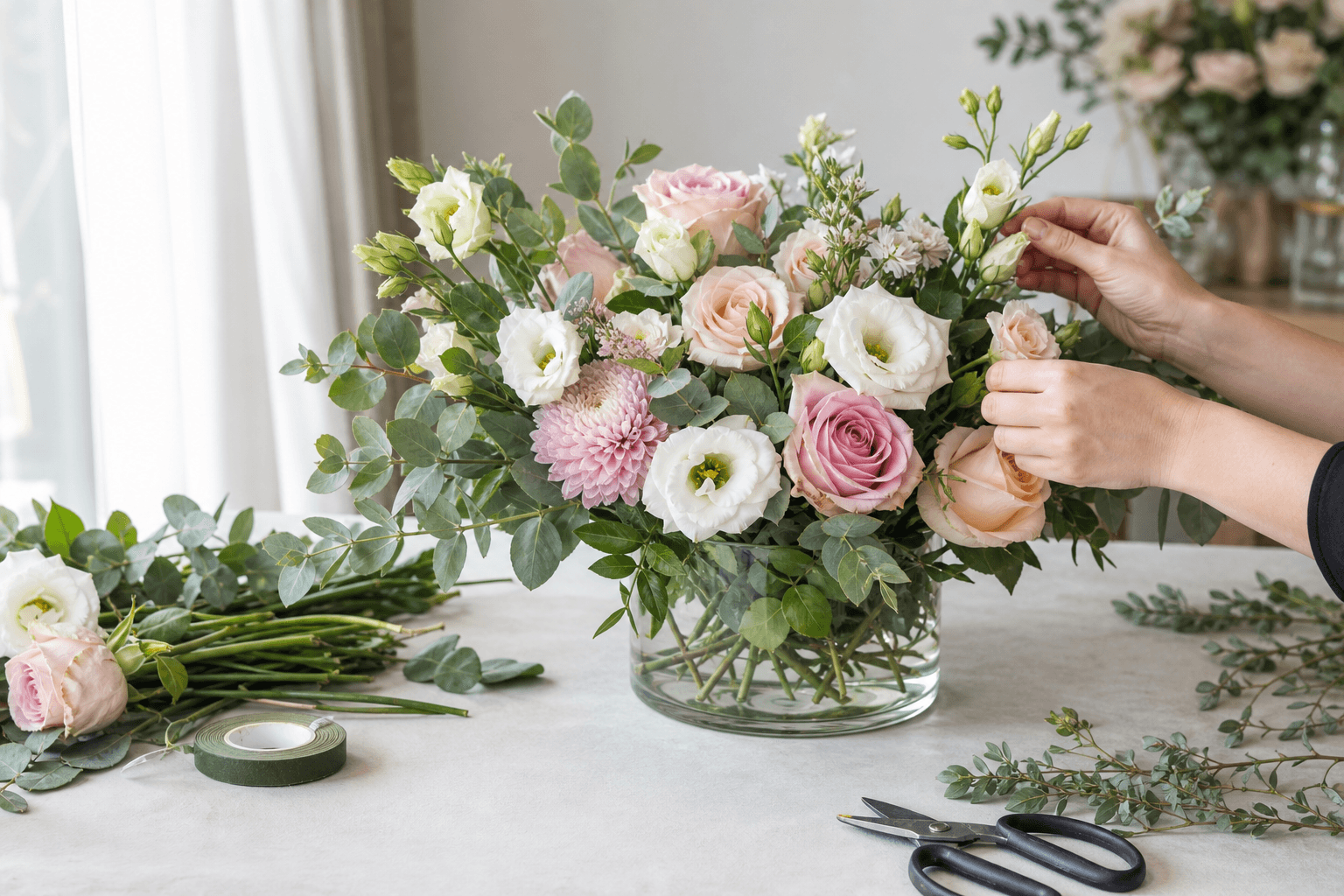
To answer how to arrange flowers for a table: keep the arrangement low, wide and stable, so people can see and talk over it. For most dining tables, the finished flowers should sit about 25 to 30 cm high, not counting a few light wisps if they do not block faces. Choose a low bowl or short cylinder, cut stems shorter than you think, and build outward before you build upward. A wide mouth helps the flowers spread naturally, but it also needs support inside the vase so stems do not slide to the edge.
A low centrepiece works best when the vase is heavier than the flowers and not too narrow at the base. The YOUEON low wide cylinder is the right sort of shape for a table: short, clear and wide enough for short-stemmed blooms or floating flowers. If you would rather send the finished result, our centerpieces are arranged by local florists and hand-delivered. For everyday tables, you can also browse every-day flowers that suit kitchens, coffee tables and small dining rooms.
Condition the stems before you start arranging
Good arranging begins before a single flower goes into the vase. Strip every leaf that would sit below the water line, because submerged leaves break down quickly and cloud the water. Recut each stem on a slant with clean, sharp snips, then place it straight into water. Kitchen scissors often crush soft stems and make woody stems ragged, which slows water uptake. A simple pair of Leize flower scissors is enough for most home arranging, especially if you cut flowers a few times a month.
Use cool water for most mixed bouquets, and add flower food when you have it. Skip the old advice about pennies, bleach, aspirin or sugar unless you know exactly what you are doing; too much can damage stems or feed bacteria. Sachets such as Floralife flower food packets are made for one vase change at a time, which is why florists tuck them into bouquets. Let roses, carnations and chrysanthemums drink for at least half an hour before arranging if they have been out of water.
Make a support grid without floral foam
If you are learning how to arrange flowers in a vase step by step, the support system matters more than the flower order. For a clear vase, dry the rim, then make a loose checkerboard with clear waterproof tape across the mouth. Leave openings wide enough for several stems, not tiny squares. The grid holds stems at an angle and stops heavier roses, lilies or hydrangeas from falling outward. Smithers clear floral tape suits this job because it is waterproof and discreet on glass.
For an opaque vase or ceramic bowl, use chicken wire instead of foam. Roll a small piece into a loose ball, press it into the vase, and anchor it with tape across the top if needed. floral chicken wire is the foam-free mechanic many florists use for loose, garden-style work. Floral foam can be convenient, but it is not needed for a table centrepiece and it gives you less freedom to adjust stems once they are placed.
Place focal flowers first, then build the rhythm
Start with the largest or most important flowers: roses, lilies, gerberas, sunflowers, hydrangeas, lisianthus or large chrysanthemums. Use odd numbers when you can, usually three or five focal blooms, because the eye reads them as natural rather than paired off. Put one focal flower slightly off centre, then place the others lower and wider, turning the vase as you work. For a relaxed Canadian autumn table, for example, mix burgundy mums, peach roses and cream lisianthus; for a winter table, white roses and evergreens look clean without feeling cold.
Next add medium flowers and line flowers, such as alstroemeria, spray roses, stock, snapdragons or tulips. These fill the gaps and set the movement. If you know how to arrange flowers in a bouquet by hand, the idea is similar, but the vase gives you a fixed base instead of your hand as the binding point. Let some stems cross inside the vase; that crossing helps support later stems. Save most greenery for last, especially eucalyptus, ruscus, salal or leatherleaf, because greenery is easiest to use as a finishing frame.
Match the vase to the table and the stems
Learning how to arrange flowers in a tall vase is different from making a dining-table centrepiece. A tall vase suits long-stemmed roses, tulips, lilies, delphinium, branches or gladiolus, but it usually belongs on a sideboard, entry table or buffet where height is not in the way. For long stems, a straight clear cylinder such as the CYS EXCEL glass cylinder vase gives support without hiding the flowers. Keep at least one third of each stem below the rim so the arrangement does not topple.
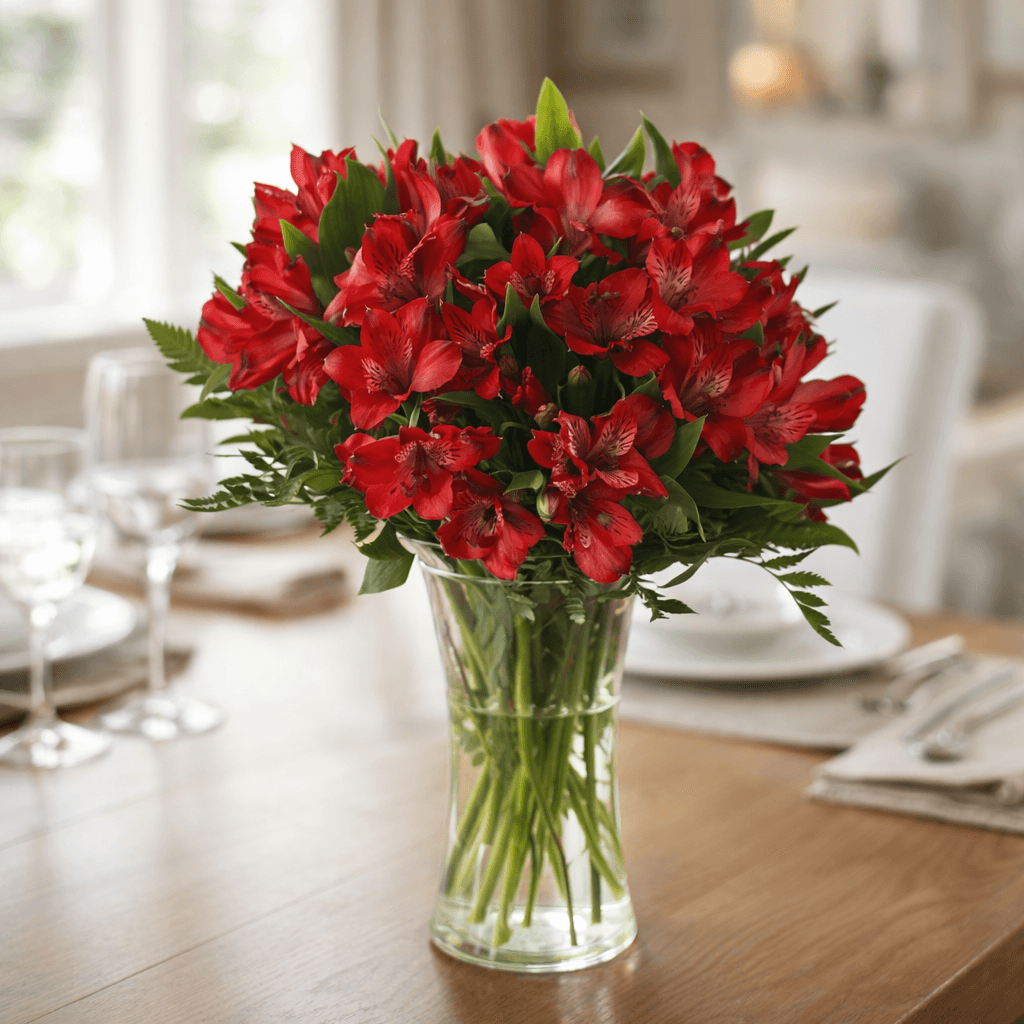
For a dinner table, short vases, bud vases and low bowls are kinder to conversation. One large centrepiece is not always better than three small ones, especially on a long table for eight or more people. If what you really want is the finished result, our vased arrangements arrive already in a vase, and Lush is a good example at $74.95 CAD when you want a full, ready-to-display gift. For softer colour, The White Rose Bouquet is $89.95 CAD and suits clean, simple tables.
Keep the arrangement fresh after it is on the table
Once the flowers are arranged, keep them away from heat vents, direct sun, wood stoves and bowls of ripening fruit. Top up the water daily, because low centrepieces can drink quickly and the water level is easy to miss. Every two days, remove the flowers if the design allows, rinse the vase, recut the stems and replace the water. Tall and narrow vases often hold a film at the bottom; an extra-long bottle brush helps scrub what your hand cannot reach.
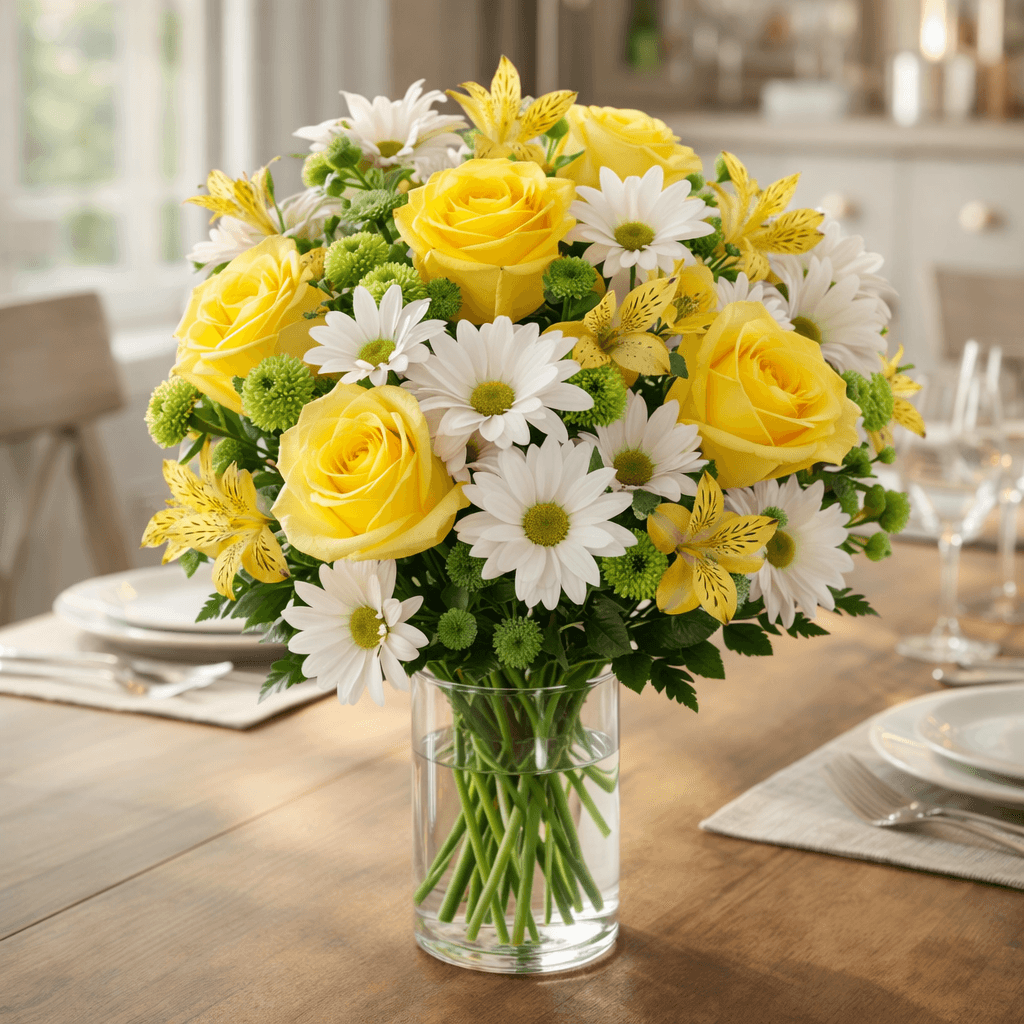
Flowers on Demand delivers across Canada, including AB, BC, MB, NB, NL, NS, ON, PE, QC, SK, NT, NU and YT, through a network of local florists who arrange and hand-deliver. Delivery is a flat $19.99 CAD, and same-day delivery is available Monday to Saturday when you order by 1:00 PM in the recipient’s local time; there is no Sunday delivery. Substitutions of similar value and style can happen when a florist is short a specific stem. For a warm table gift, The Sunny Sentiments Bouquet is $79.95 CAD, and more options are in our centerpieces collection.
Common questions
- How do you arrange flowers for a table?
- Use a low, wide vase or bowl so guests can see over it, and keep the finished arrangement around 25 to 30 cm high for most dining tables. Build a tape grid or chicken-wire base, place the focal flowers first, add medium flowers next, and finish with greenery around the edges.
- How do you arrange flowers?
- Start by stripping leaves below the water line, recutting stems, and placing them in clean water with flower food. Arrange the largest flowers first in odd numbers, turn the vase as you work, then add smaller blooms and greenery to fill gaps and shape the outline.
- How do you arrange flowers in a vase?
- Choose a vase that fits the stem length and the place it will sit: short for a table, taller for a sideboard or entryway. Use clear floral tape across the mouth of a clear vase, or chicken wire inside an opaque vase, so each stem stays at the angle you choose.
Arrangements to send
Lush
The Sunny Sentiments Bouquet
Simply Elegant Spathiphyllum
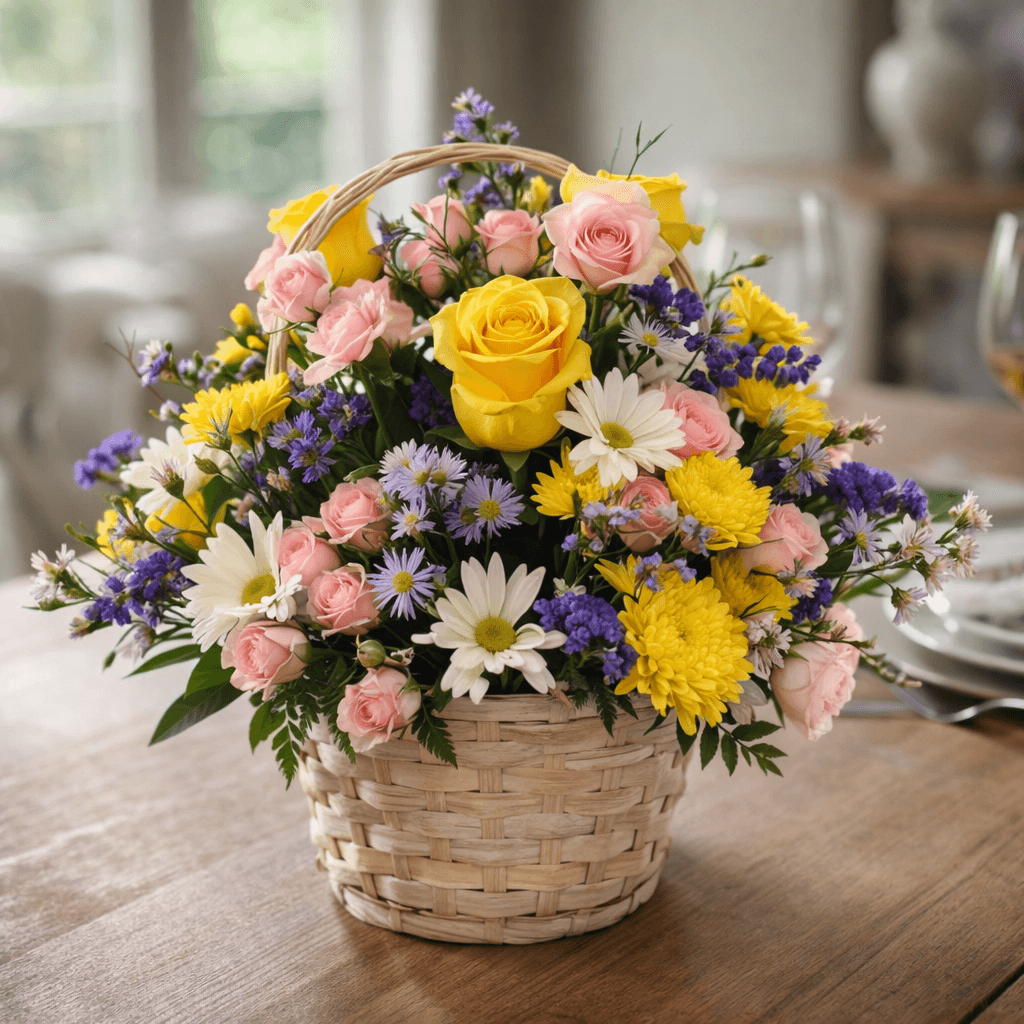
Splendid
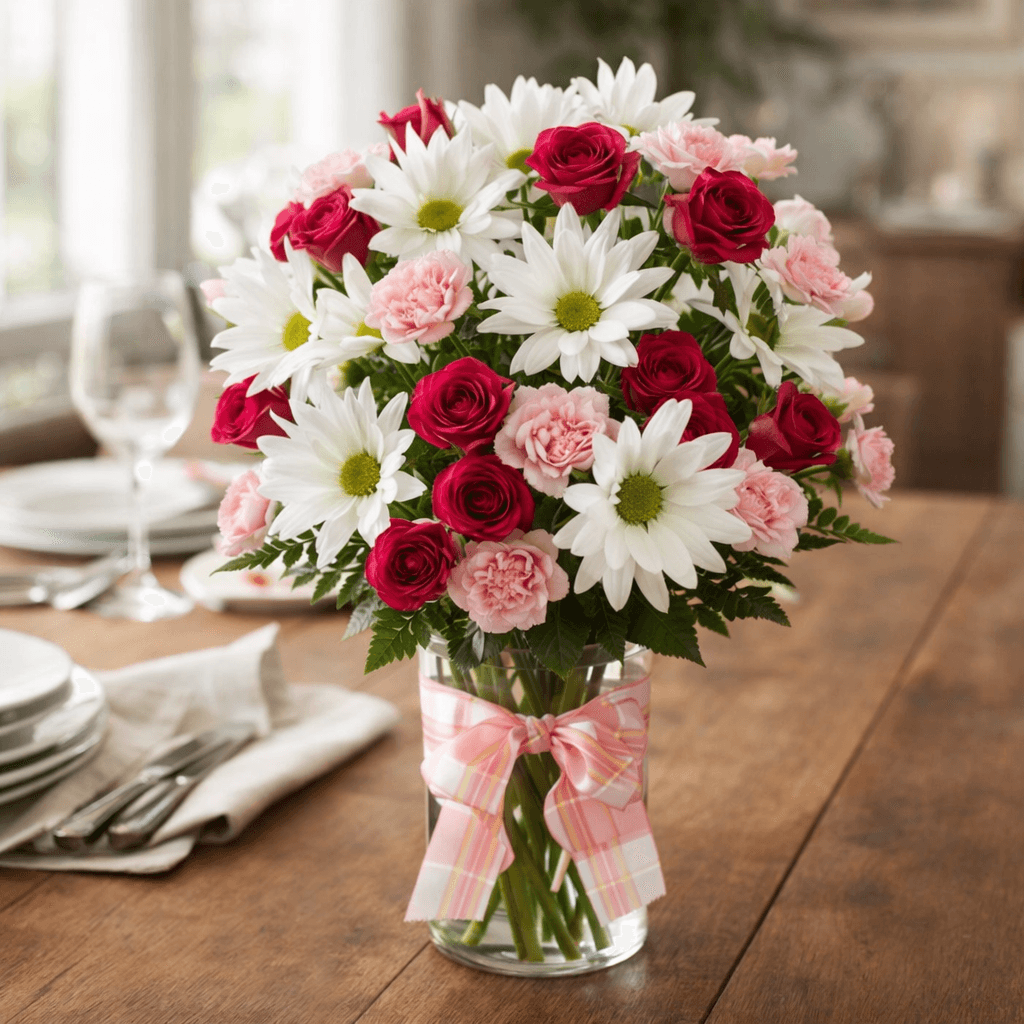
Sweet Surprises Bouquet
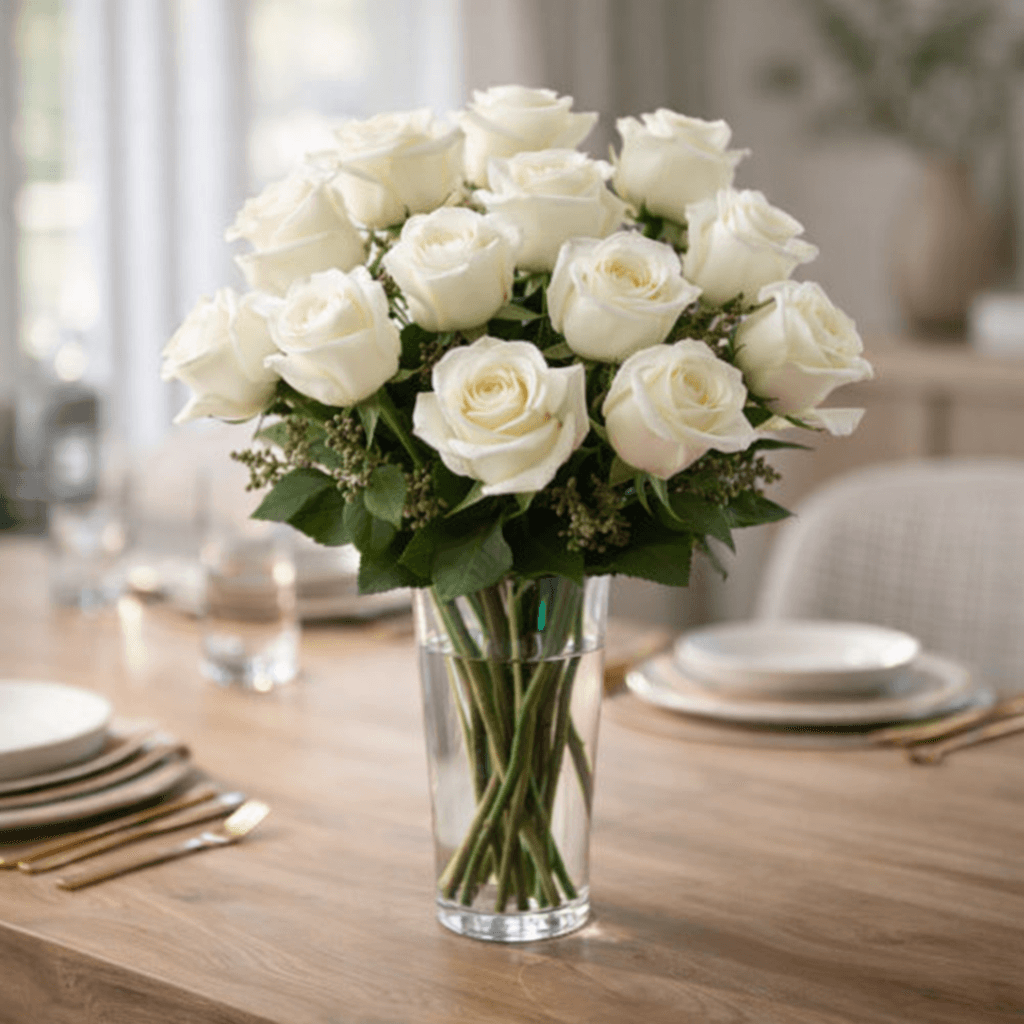
The White Rose Bouquet
Keep exploring
Shop these arrangements
More from the blog
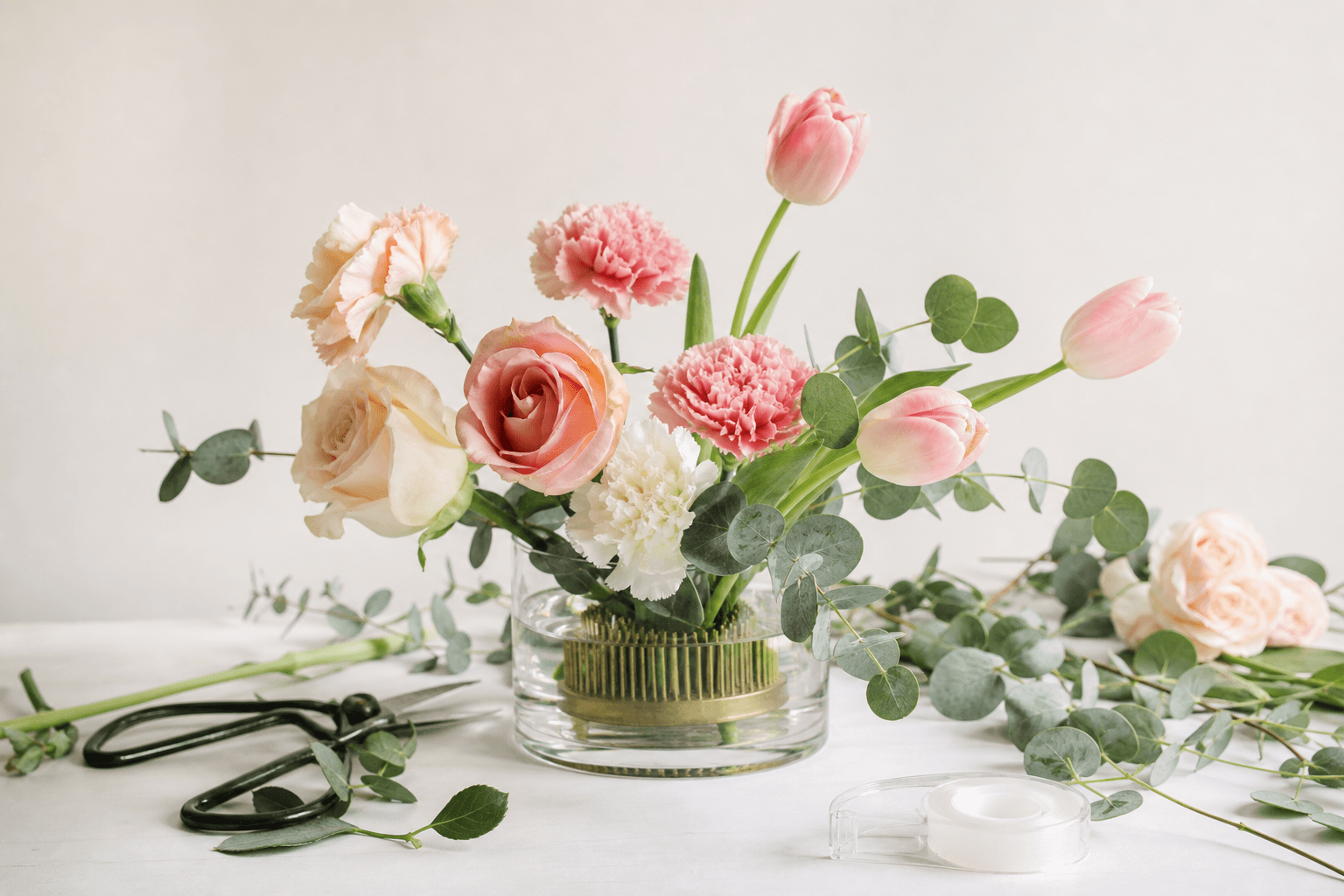
What Is a Flower Frog? How to Use One in a Vase
A flower frog holds stems in place without floral foam. This guide explains pin, cage and glass frogs, plus tape grids and chicken wire for low bowls and everyday vases.
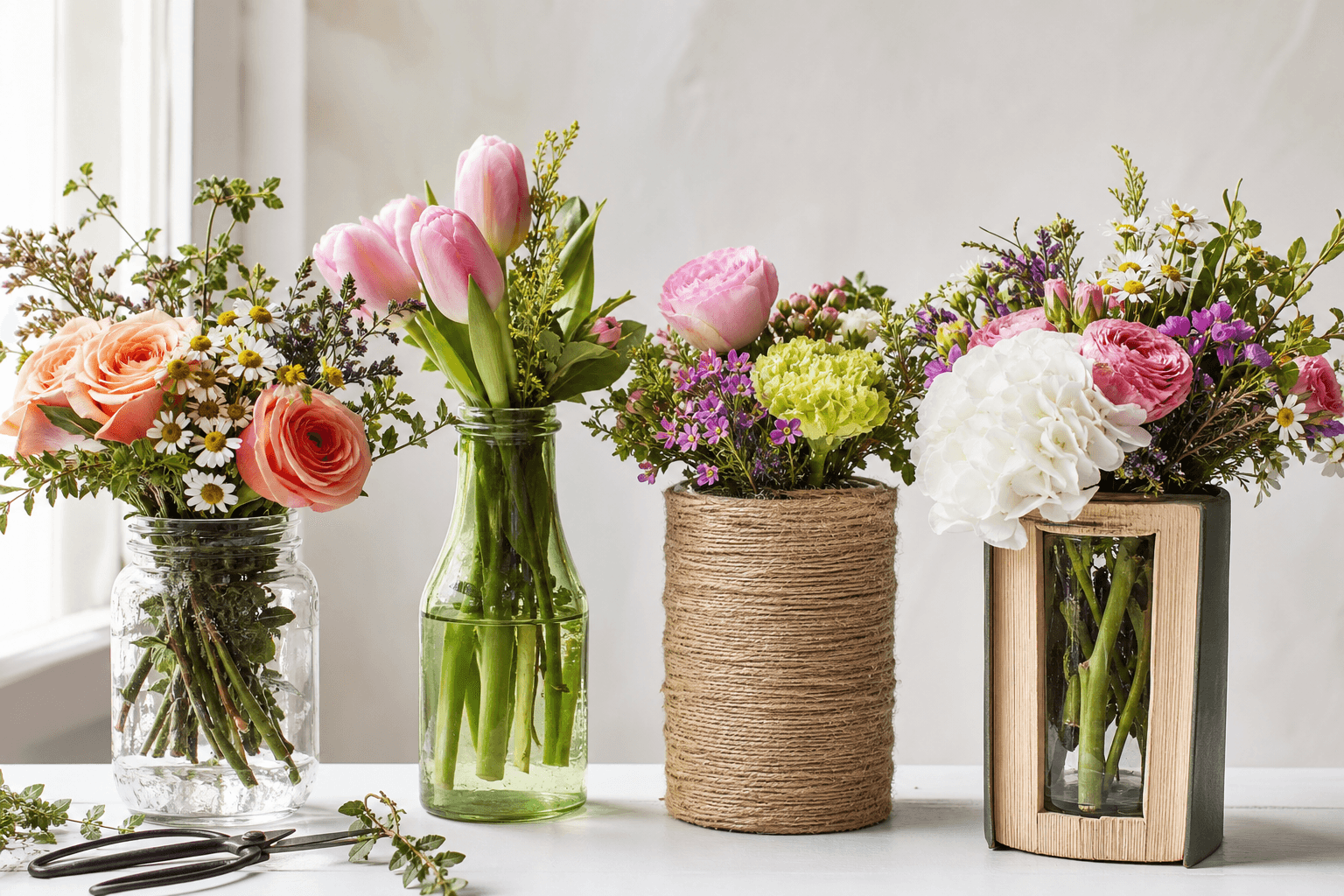
How to Make a DIY Flower Vase From Things You Already Own
Turn jars, bottles, tins and even old books into usable flower vases. The key is choosing the right insert, keeping water contained, and matching the vessel to the flowers.
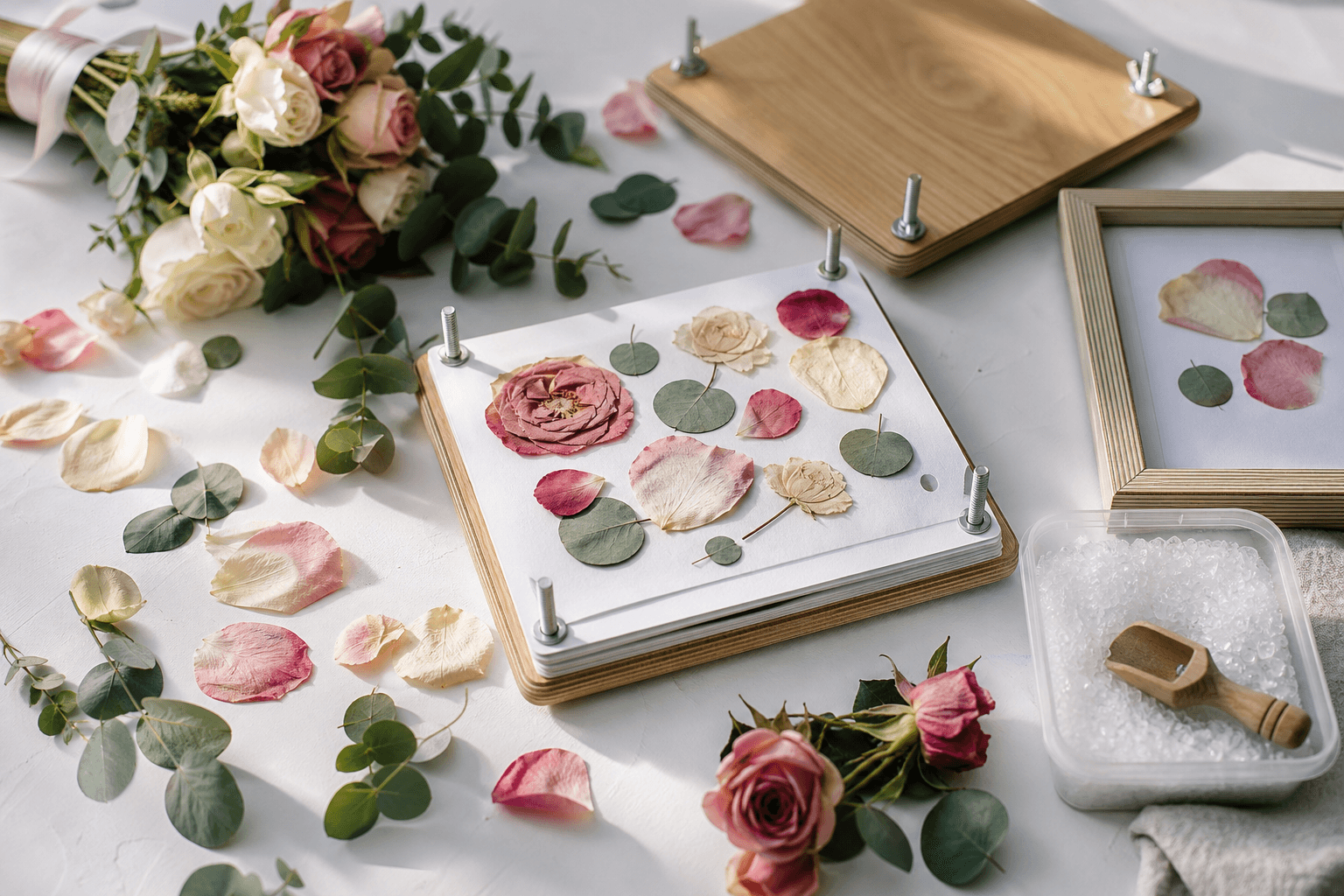
How to Preserve Wedding Flowers: Pressing, Drying and Silica Gel
Preserving a bouquet works best when you start within two days. This guide explains pressing, silica gel drying, air drying, framing, and which wedding flowers are worth saving.